Somewhere right now, someone is filming their chia pudding and announcing their fiber count like it's a high score. Bean bowls, berries, a proud "28 grams before noon!" Welcome to fibermaxxing.
Your grandma had a simpler name for it: roughage. And for once, a social media nutrition trend might actually be worth paying attention to.
The idea is simple: eat more fiber-rich foods. Nothing revolutionary, but considering most Americans aren't getting enough, maybe a little extra attention is overdue.
So how much fiber do we actually need? What does it do for our health? And is there such a thing as too much?
Let's get into the science, without turning breakfast into a math assignment.
Wait, What Even Is Fiber?
Fiber is a type of carbohydrate found in plant foods that our bodies can't fully digest. You'll find it in fruits, vegetables, beans, whole grains, nuts, and seeds. Meat, eggs, and dairy don't naturally contain fiber.
Unlike most carbohydrates, fiber passes through the small intestine largely undigested before reaching the colon. There, different types of fiber do different jobs. Some help regulate stool consistency and keep things moving, while others feed the beneficial bacteria living in our gut.
And those benefits extend well beyond bathroom habits.
How Much Do We Need? (Spoiler: More Than Most of Us Get)
Here's where fibermaxxing gets interesting. Most Americans aren't even meeting the recommended amount, much less exceeding it.
According to USDA data, American adults consume an average of about 16 to 17 grams of fiber per day.
So before anyone worries about overdoing it, most of us are still working on showing up.
The National Academies developed fiber recommendations based on approximately 14 grams for every 1,000 calories consumed, drawing particularly from research on cardiovascular health.
For adults, that translates to the amounts shown in the chart below.

These are called Adequate Intakes (AIs), rather than Recommended Dietary Allowances (RDAs). The distinction matters: researchers had enough evidence to establish a reasonable intake goal, but not enough to determine a precise requirement for nearly every healthy individual.
You may also recognize 28 grams from Nutrition Facts labels. That's the FDA's Daily Value for fiber. It doesn't start at the FDA. The National Academies are an independent scientific body, not part of the FDA. They review the research and set Dietary Reference Intakes, including the targets above. The FDA then summarizes that same science as one number on the label, based on a standard 2,000-calorie diet, so you can compare foods more easily.
The takeaway? Most of us don't need to become fibermaxxing champions. We just need to close the gap between what we're eating and what our bodies could benefit from.
Some social media creators aim for 50 or even 60 grams daily. That's well beyond the usual recommendations and isn't necessary for most people to experience the benefits. Reaching the recommended amount is the useful part of this trend. Going a lot higher, especially overnight, is how people get in trouble.
Fiber's Surprisingly Long Résumé
Fiber has earned its reputation for more than keeping you regular. Research connects adequate fiber intake with several meaningful health benefits.
Cholesterol: A Little Help From Your Gut
Certain soluble fibers, particularly those that form a gel when mixed with water, can help lower LDL cholesterol. More on that below.
Here's how: your liver uses cholesterol to produce bile acids, which help digest fats. Normally, much of that bile gets recycled. Viscous soluble fiber can interfere with that recycling, allowing more bile acids to leave the body through stool. Your liver then uses additional cholesterol to replace them.
A 2023 systematic review and meta-analysis of randomized clinical trials found that soluble fiber supplementation reduced LDL cholesterol by approximately 8 mg/dL on average.
That's a meaningful benefit, although the effect varies depending on the fiber type, amount consumed, and individual.
Fiber isn't a replacement for medication when medication is needed, but it can be a useful part of a heart-healthy eating pattern.
Blood Sugar: Slowing Things Down
Some soluble fibers slow digestion and the absorption of carbohydrates, helping moderate the rise in blood sugar after a meal.
This is particularly relevant for people managing blood sugar, although the effect depends on the food, fiber type, and overall meal composition.
Fiber isn't a treatment for diabetes on its own. It's one of several dietary factors that can help support glucose management.
Fullness: Staying Satisfied Longer
Fiber-rich foods can help meals feel more satisfying.
Some fibers absorb water and increase the volume of food in the digestive tract. Others slow stomach emptying, while foods naturally rich in fiber often require more chewing.
It's not a magic appetite suppressant, but there's a reason a bowl of beans and vegetables may keep you satisfied longer than a snack made primarily from refined carbohydrates.
Digestive Health: Yes, We're Talking About Poop
We can't write an article about fiber without discussing the bathroom.
Different fibers influence digestion in different ways. Some help retain water in stool, making it softer and easier to pass. Others add bulk or help support regular bowel movements.
Certain fibers are also fermented by gut bacteria, producing compounds called short-chain fatty acids that help support the cells lining the colon.
It's a pretty impressive amount of work for something our bodies don't fully digest.
Fiber Comes in Two Flavors (Sort Of)
You've probably heard these terms, but you don't need to memorize a list of which foods contain which type.
Soluble fiber dissolves or disperses in water. Some forms create a gel-like consistency, similar to what happens when oatmeal sits in liquid. These gel-forming fibers are especially useful for cholesterol and blood sugar management.
Common sources include oats, barley, beans, apples, citrus fruits, and psyllium husk (the fiber in familiar brands like Metamucil).
Insoluble fiber doesn't dissolve in water. It contributes to stool bulk and can help move material through the digestive tract.
You'll find it in wheat bran, whole grains, nuts, vegetables, and the skins of many fruits.
Most plant foods contain a combination of fiber types, and individual fibers can behave differently even within these broad categories.
Fortunately, you don't need separate daily targets for soluble and insoluble fiber. The official recommendations focus on total fiber intake.
Eat a variety of plant foods, and you'll naturally get a mix.
The Sneaky Fiber Clue on Your Nutrition Label
This is one of my favorite things to explain because it clears up a common misunderstanding about nutrition labels.
On the Nutrition Facts label, dietary fiber appears underneath Total Carbohydrate.
That's because total carbohydrates include sugars, starches, and fiber.
Look one line down. Some of those "carbs" are actually fiber doing good work.
But those carbohydrates don't all behave the same way in the body.
Sugars and starches are generally broken down into smaller molecules that can be absorbed and used for energy. Fiber resists digestion in the small intestine, although some types are fermented by bacteria in the colon and contribute a modest amount of energy.
This is where the term net carbs comes from.
Some people estimate net carbs by subtracting dietary fiber from total carbohydrates.
For example:
- Total Carbohydrate: 30 grams
- Dietary Fiber: 8 grams
- Estimated Net Carbs: 22 grams
But there's an important catch.
Net carbs aren't an FDA-defined nutrient, and the calculation isn't an exact measurement of how many carbohydrates your body will absorb.
Different fibers behave differently, and sugar alcohols—often found in sugar-free or low-carb products—complicate the calculation further. Some are partially absorbed, while others contribute little energy.
For most people, the more useful lesson is simply this: a food with more total carbohydrates isn't necessarily a less nutritious choice.
Beans, fruit, and whole grains contain carbohydrates alongside fiber, vitamins, minerals, and other beneficial nutrients.
If you have diabetes or use medications that require carbohydrate counting, follow the guidance of your healthcare team rather than relying on net-carb calculations alone.
Fiber and Colorectal Cancer: What Does the Research Really Say?
This is an important conversation, especially given the rise in colorectal cancer among younger adults.
While colorectal cancer rates have generally declined in older adults, largely due to screening, rates have been increasing among younger people.
According to the American Cancer Society's 2026 report, colorectal cancer rates among adults ages 20-49 increased by approximately 3% annually between 2013 and 2022.
About three out of four people diagnosed before age 50 are diagnosed at a later stage.
Researchers are still working to understand why this is happening. Diet, metabolic health, environmental exposures, and other factors are being investigated, but there isn't one established explanation.
So where does fiber fit into the picture?
What the Evidence Supports
Large observational studies have found associations between higher dietary fiber intake, particularly from whole grains, and lower colorectal cancer risk.
A major 2011 systematic review published in BMJ found that each additional 10 grams of daily fiber intake was associated with approximately a 10% lower risk of colorectal cancer.
That's encouraging, but there's an important distinction between an association and proof of prevention.
Observational studies follow people's habits and health outcomes over time. They can identify patterns, but they can't establish that fiber itself caused the difference.
People who eat more fiber may also exercise more, consume fewer processed meats, maintain different body weights, or have other habits that influence their risk.
And not every study has found the same relationship.
A large study involving U.S. nurses and health professionals found no clear association between total fiber intake and colorectal cancer risk overall, although some findings suggested benefits from whole grains and cereal fiber in men.
What About Younger Adults?
Research specifically examining early-onset colorectal cancer is still developing.
One study involving nearly 30,000 women in the Nurses' Health Study II examined dietary patterns and precancerous colorectal growths diagnosed before age 50.
Women following healthier dietary patterns, including greater consumption of plant foods and whole grains, had a lower risk of these growths. More Western-style eating patterns were associated with higher risk.
Importantly, that study examined overall diet quality—not fiber in isolation.
Clinical trials evaluating fiber supplements for preventing the recurrence of colorectal polyps have also generally failed to demonstrate a clear protective effect.
So, Does Fiber Prevent Colorectal Cancer?
We can't make that claim.
What we can say is that fiber-rich dietary patterns, particularly those emphasizing whole grains and plant foods, are associated with better colorectal health in many studies.
That's a good reason to include more of these foods in our diets, but it isn't a guarantee against cancer.
And it certainly isn't a substitute for screening.
For adults at average risk, colorectal cancer screening generally begins at age 45. People with certain family histories or other risk factors may need to begin earlier. Talk with your own healthcare provider about when to start and what makes sense for you. If headlines or a friend's diagnosis have you worried, have that conversation. It's never too early to ask.
Symptoms such as rectal bleeding, persistent changes in bowel habits, unexplained abdominal pain, or unexplained weight loss deserve medical evaluation regardless of age.
The takeaway isn't to fear what's on your plate. It's to recognize that everyday habits and appropriate screening both matter.
When Fibermaxxing Goes Too Far
Absolutely. Or, more precisely, you can eat more fiber than your digestive system comfortably tolerates—especially if you increase it too quickly.
There's no established upper intake limit for dietary fiber in healthy adults, but suddenly jumping from 15 grams to 50 grams a day can be a recipe for gas, abdominal cramping, and the bloating nobody asked for. Some people develop diarrhea. Others become constipated, particularly if they're not consuming enough fluids.
Ask anyone who went from zero to bean-bowl-three-times-a-day. Their roommates know.
Your gut bacteria also need time to adjust to a greater supply of fermentable fiber.
A practical approach is to increase fiber gradually, perhaps by around five grams per day for several days before increasing again. That's a starting point, not a universal rule. Some people need to go much more slowly.
Drink adequate fluids, pay attention to how you feel, and adjust accordingly.
People with certain gastrointestinal conditions, bowel narrowing, or a prescribed low-fiber diet may need a more personal plan. That's not a comprehensive list, just a few common examples. If your gut has a backstory, it's worth having a conversation with your clinician or registered dietitian before jumping on the fibermaxxing bandwagon.
This isn't meant to scare anyone. It's just a heads-up that some guts need a personal plan.
Easy Ways to Eat More Fiber (Without Overthinking It)
The good news? You don't need expensive powders, specialty products, or a spreadsheet to get more fiber.
Start with foods you already enjoy.
No powders, no spreadsheets, no fiber leaderboard required.
Here are a few examples of fiber-rich foods and their approximate fiber content, using USDA figures, shown in the chart below.

Values are approximate and vary by variety, preparation, and serving size.
A few easy ideas:
- Add black beans to your rice bowl or salad.
- Keep the skin on your apple or potato.
- Toss berries into oatmeal or yogurt.
- Add an extra serving of vegetables at dinner.
- Swap some refined grains for whole grains.
- Sprinkle chia seeds into breakfast.
You don't need to overhaul your entire diet. Small additions throughout the day can make a meaningful difference.
Where Zedric's Fits In

At Zedric's, we focus on making eating well easier through chef-crafted meals, real ingredients, and thoughtful nutrition.
Across our current menu, a typical meal provides approximately four grams of fiber, or about 14% of the FDA's 28-gram Daily Value. Most meals fall around three to five grams, while some offer considerably more.
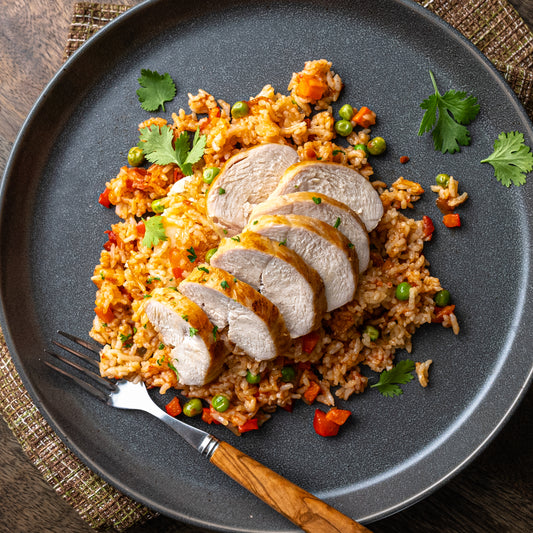
For example, our Lemon Herb Chicken with Roasted Baby Carrots & Baby Broccolini provides 10 grams of fiber, while our Blueberry Overnight Oats deliver 11 grams.
One meal isn't going to meet your entire daily fiber goal, and it doesn't need to.
Pairing convenient, balanced meals with fruit, vegetables, beans, and whole grains throughout the day can help you build a fiber-rich eating pattern without spending every evening in the kitchen.
That's the kind of nutrition strategy I can get behind: practical, sustainable, and still enjoyable.
So, Should You Fibermaxx?
Fibermaxxing might have a trendy new name, but the science behind eating more fiber isn't new.
Most Americans consume substantially less fiber than recommended. Increasing our intake can support digestive health, cholesterol management, blood sugar regulation, and satiety. Fiber-rich eating patterns are also associated with better long-term health outcomes, including lower colorectal cancer risk in many observational studies.
But more isn't automatically better.
You don't need to chase 50 or 60 grams because someone on TikTok does. Start with the recommended amount, increase gradually, drink adequate fluids, and pay attention to how your body responds.
Grandma had the right idea all along. TikTok just gave it better lighting and a hashtag. Eat the beans, keep the skin on your apple, drink your water, and leave the high score to the internet.
This article is for general education and is not a substitute for individualized medical advice. If you have a medical condition, take medications affected by dietary intake, or have questions about your fiber needs, consult your healthcare provider or registered dietitian.

Kimberly Lutton, MSN, FNP-C
Co-Owner & COO, Zedric's Fit with Flavor
Kimberly is a board-certified family nurse practitioner with a degree in nutrition science and a background in clinical research. At Zedric's, she brings her health and nutrition expertise to the company's ingredients, sourcing, quality standards, and approach to making eating well easier.
Have a question or thought? Email me at flavornotes@zedrics.com.
Sources
- Institute of Medicine. Dietary Reference Intakes for Energy, Carbohydrate, Fiber, Fat, Fatty Acids, Cholesterol, Protein, and Amino Acids. National Academies Press; 2002/2005. https://nap.nationalacademies.org/read/10490
- National Academies DRI summary table (Total Fiber AIs). https://www.nationalacademies.org/cdn/materials/9fb9fae6-337c-4b7c-9821-2c81d1f65ad0
- USDA/HHS. Food Sources of Fiber (standard portions), Aug 2024. https://www.dietaryguidelines.gov/sites/default/files/2024-08/Food-Sources-Fiber-Standard-508C.pdf
- FDA. Interactive Nutrition Facts Label: Dietary Fiber (Oct 2021). https://www.accessdata.fda.gov/scripts/interactivenutritionfactslabel/assets/InteractiveNFL_DietaryFiber_October2021.pdf
- FDA. Food Labeling: Revision of the Nutrition and Supplement Facts Labels. Federal Register. May 27, 2016. (Daily Value of 28 g based on the IOM Adequate Intake of 14 g/1,000 kcal times a 2,000-calorie reference diet.) https://www.federalregister.gov/documents/2016/05/27/2016-11867/food-labeling-revision-of-the-nutrition-and-supplement-facts-labels
- USDA ARS. What We Eat in America, NHANES August 2021-August 2023, Table 1 (dietary fiber, males and females age 20+: 16.3 g). https://www.ars.usda.gov/ARSUserFiles/80400530/pdf/2123/Table_1_NIN_MaleFemale_2123.pdf
- Dahl WJ, Stewart ML. Position of the Academy of Nutrition and Dietetics: Health Implications of Dietary Fiber. J Acad Nutr Diet. 2015;115(11):1861-1870. https://pubmed.ncbi.nlm.nih.gov/26514720/
- Ghavami A, et al. Soluble Fiber Supplementation and Serum Lipid Profile: A Systematic Review and Dose-Response Meta-Analysis of RCTs. Adv Nutr. 2023;14(3):465-474. https://pubmed.ncbi.nlm.nih.gov/36796439/
- Hartley L, et al. Dietary fibre for the primary prevention of cardiovascular disease. Cochrane Database Syst Rev. 2016;(1):CD011472. https://www.cochrane.org/evidence/CD011472_dietary-fibre-prevent-cardiovascular-disease
- Aune D, et al. Dietary fibre, whole grains, and risk of colorectal cancer: systematic review and dose-response meta-analysis of prospective studies. BMJ. 2011;343:d6617. https://doi.org/10.1136/bmj.d6617
- Cochrane. Does dietary fibre prevent the recurrence of colorectal adenomas and carcinomas? CD003430. https://www.cochrane.org/evidence/CD003430_does-dietary-fibre-prevent-recurrence-colorectal-adenomas-and-carcinomas
- Mayo Clinic Staff. Dietary fiber: Essential for a healthy diet. Updated Dec 24, 2025. https://www.mayoclinic.org/healthy-lifestyle/nutrition-and-healthy-eating/in-depth/fiber/art-20043983
- Dunkin MA / Schmidt TM. Fibermaxxing: Is this TikTok trend good for you? Mayo Clinic Press. Feb 5, 2026. https://mcpress.mayoclinic.org/nutrition-fitness/fibermaxxing-is-this-tiktok-trend-good-for-you/
- University of Utah Health. Fibermaxxing: Can You Have Too Much Fiber? Jul 2, 2026. https://healthcare.utah.edu/healthfeed/2026/07/fibermaxxing-can-you-have-too-much-fiber
- UW Medicine Right as Rain. Is Fibermaxxing the Best Way to Get More Fiber? Mar 2, 2026. (Many influencers aim closer to ~50 g/day.) https://rightasrain.uwmedicine.org/body/food/how-much-fiber-to-eat-daily
- White DA. You Should Be Fibermeeting, Not Fibermaxxing. Food Network. Aug 18, 2025. (Typical range ~25-40 g; many aiming upward of 50 g.) https://www.foodnetwork.com/healthyeats/healthy-tips/you-should-be-fibermeeting-not-fibermaxxing
- Youmshajekian L. Does fibermaxxing work? It may depend on your microbiome. Scientific American. Aug 18, 2026. (Some people aim for 60 g or more a day.) https://www.scientificamerican.com/article/does-fibermaxxing-work-it-may-depend-on-your-microbiome/
- Rogers K. Is the 'fibermaxxing' trend good for you? CNN. Jul 26, 2025. https://www.cnn.com/2025/07/26/health/fibermaxxing-tiktok-trend-fiber-benefits-wellness
- Lee BY. 'Fibermaxxing' Trends On TikTok… Forbes. Jul 24, 2025. https://www.forbes.com/sites/brucelee/2025/07/24/fibermaxxing-trends-on-tiktok-how-much-fiber-should-you-be-getting/
- American Heart Association. Prevention and Treatment of High Cholesterol. https://www.heart.org/en/health-topics/cholesterol/prevention-and-treatment-of-high-cholesterol-hyperlipidemia
- CDC. Fiber: The carb that helps you manage diabetes. https://www.cdc.gov/diabetes/healthy-eating/fiber-helps-diabetes.html
- NIH News in Health. Rough Up Your Diet. July 2019. https://newsinhealth.nih.gov/2019/07/rough-up-your-diet
- FDA. Interactive Nutrition Facts Label: Total Carbohydrate. https://www.accessdata.fda.gov/scripts/interactivenutritionfactslabel/total-carbohydrate.cfm
- FDA. Interactive Nutrition Facts Label: Sugar Alcohols (Oct 2021). https://www.accessdata.fda.gov/scripts/interactivenutritionfactslabel/assets/InteractiveNFL_SugarAlcohols_October2021.pdf
- American Cancer Society. Colorectal cancer statistics, 2026 (CA Cancer J Clin). https://www.cancer.org/content/dam/cancer-org/research/cancer-facts-and-statistics/colorectal-cancer-facts-and-figures/crc-2026/2026-crc-facts-figures-ca-article.pdf
- American Cancer Society. Colorectal Cancer Drops in Older Adults and Rises in Younger Ones (2026). https://www.cancer.org/research/acs-research-news/colorectal-cancer-drops-in-older-adults-and-rises-in-young-ones.html
- Zheng X, et al. Comprehensive Assessment of Diet Quality and Risk of Precursors of Early-Onset Colorectal Cancer. J Natl Cancer Inst. 2021;113(5):543-552. https://doi.org/10.1093/jnci/djaa164
- He X, et al. Dietary intake of fiber, whole grains and risk of colorectal cancer (NHS & HPFS). Int J Cancer. 2019. https://onlinelibrary.wiley.com/doi/10.1002/ijc.32382